Automotive industry
A tier-one automotive supplier trains twice as fast
Autonomous operator training, guided in augmented reality on the real equipment.
Result: training speed doubled.
Your challenges
A forgotten step, a reversed order, a skipped check: the procedure was written, the task was not learned. Guided on the real equipment, in the right order, everyone rehearses the procedure as often as needed, before doing the job for real.
The situation
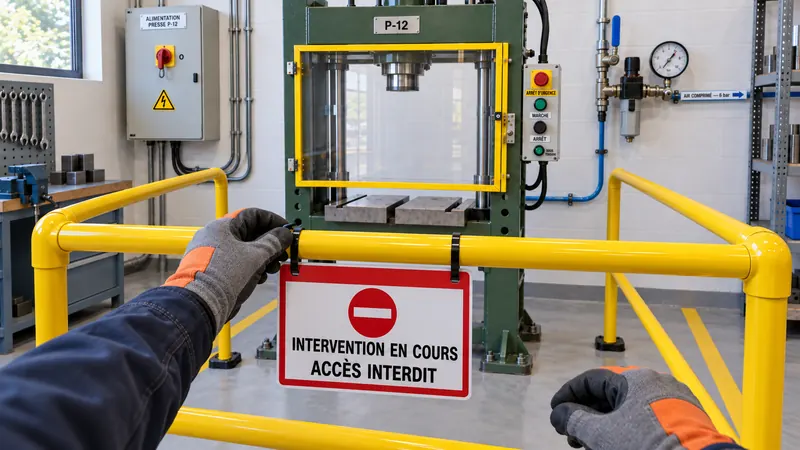
According to the INRS, a significant share of machine-related accidents occur outside production, particularly during maintenance, cleaning or adjustment1.
Before intervening, every step counts, in a precise order. The sheet describes them; you still need to have done them often enough not to forget any.
Maintenance, cleaning, adjustment, exceptional interventions: they are done too rarely to master. That is where people hesitate.
A reversed step, a forgotten check, and the defect goes to the customer. In the automotive industry, the IATF 16949 standard requires work instructions that operators understand and that are available at the workstation2.
Read in a classroom or signed at the bottom of a page, the instruction is not yet a skill. At the workstation, hands are busy and eyes are on the equipment.
What SHIFT89 changes
Each step appears where action is needed, in the order of your procedure: the checkpoint is in plain sight, nobody has to look for it.
Learn moreBoth hands stay on the tool, eyes on the equipment: no tablet to hold during the intervention.
Learn moreA quiz checks that the procedure is understood; you see who has learned what, and where people struggle. Assessment and authorisation remain yours.
Learn moreAfter an incident or a change, your expert updates the tutorial in a few minutes: everyone immediately learns the new way of doing things.
Learn moreOur approach
Before designing our tool, we studied how people learn to do with their hands what they cannot yet do.
With research laboratories, we studied how people learn a task they don’t know how to do, in a constrained environment. The aim is not to make people act like robots: it is for everyone to understand, remember and own the skill. This method is validated by 5 industrial PhD theses.
The real challenge is creation: experts don’t have time, and not all of them are comfortable with digital tools. They create their own tutorials, very quickly, with the help of the built-in AI, and these tutorials apply the learning method without them needing to know it.
As former industry professionals, we know every second counts: the expert’s time must be kept as short as possible. We also know the value of trade or defence secrets: everything works offline, without compromise, artificial intelligence included, right down to translating a tutorial in a few seconds.
The result: tutorials created in a few minutes, that really make people learn.
At your site
Lockout before an intervention, batch changeover, line cleaning, press adjustment: the task rehearsed before doing it for real.
IndustrySafety procedures on equipment, rare interventions in the workshop or on board: revise the procedure on the real equipment before you need it.
DefenceIn France: The bac pro MSPC (vocational baccalaureate in maintenance) reference framework requires compliance with lockout and lockout removal procedures3: pupils rehearse them on the technical training area, in the right order.
The tutorial prepares for and rehearses the task, on the real equipment, following your procedure. It replaces neither safety training, nor the authorisation issued by the employer, nor assessment at the workstation.
Your rules, your instructions and your supervision remain essential: the tutorial makes them easier to apply, it does not replace them.
Measured results
Automotive industry
Autonomous operator training, guided in augmented reality on the real equipment.
Result: training speed doubled.
Frequently asked questions
No. Authorisation is issued by the employer, after training and an assessment that remain yours. The tutorial prepares for and rehearses the task, on the real equipment, following your procedure.
In a few minutes: your expert updates the tutorial, and everyone learns the new way of doing things on the equipment.
No, and no tool can. It helps avoid omissions by showing each step in the right place, in the right order, and a quiz checks that the procedure is understood. Vigilance, supervision and your safety rules remain essential.
A 30-minute to 2-hour demo, on one or more of your real use cases.
or write to us