
Deployment
8 trainers operational after one day
In our deployments, one day of training is enough: trainers create their first tutorial that same afternoon, then work on their own from the next day.
Result: 8 trainers operational at D+1.
Your challenges
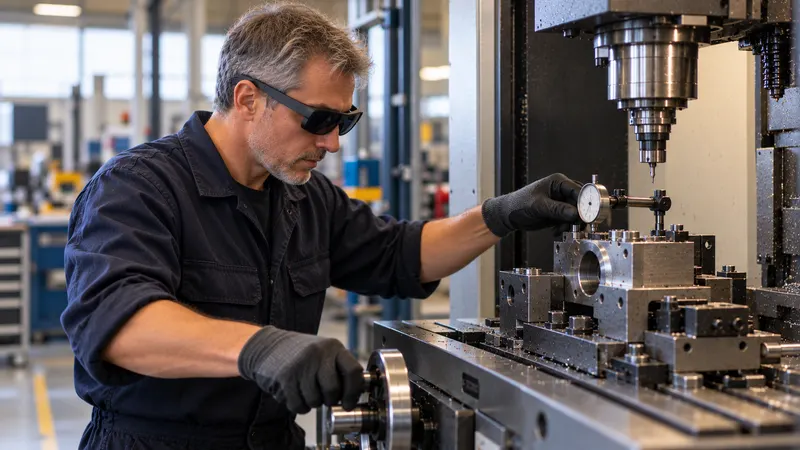
The best expert is also the most in demand: every breakdown, every adjustment, every newcomer goes through them. Their time deserves respect. They pass on their hands-on skill themselves, on the equipment, in a few minutes, even if they are not comfortable with IT.
The situation
In France: Hands-on experts are among the hardest to replace: 78% of recruitment projects for machine setters, and 71.8% of those for industrial maintenance technicians, are considered difficult1.
An hour spent writing a procedure is an hour taken away from production, maintenance or training.
A written procedure or an edited video takes hours of back-and-forth. It never gets done, or never gets updated.
Masters of the hands-on skill are not always masters of the keyboard. A tool that takes long to learn ends up in a drawer.
Equipment changes. If updating costs as much as creating, it does not get done, and the tutorial shows a procedure that is no longer the right one.
What SHIFT89 changes
One minute per instruction, a few minutes for a tutorial: the expert passes on their skill while working, with no writing, no filming, no mandatory editing.
Learn moreGlasses or headset on, they keep their hands on the equipment. Even an expert who is not comfortable with IT creates tutorials themselves.
Learn moreThey create in their own language; an artificial intelligence running at your site translates the tutorial in a few seconds, without any connection.
Learn moreTheir skill stays attached to the equipment: they no longer have to repeat it for every newcomer.
Learn moreOur approach
Before designing our tool, we studied how people learn to do with their hands what they cannot yet do.
With research laboratories, we studied how people learn a task they don’t know how to do, in a constrained environment. The aim is not to make people act like robots: it is for everyone to understand, remember and own the skill. This method is validated by 5 industrial PhD theses.
The real challenge is creation: experts don’t have time, and not all of them are comfortable with digital tools. They create their own tutorials, very quickly, with the help of the built-in AI, and these tutorials apply the learning method without them needing to know it.
As former industry professionals, we know every second counts: the expert’s time must be kept as short as possible. We also know the value of trade or defence secrets: everything works offline, without compromise, artificial intelligence included, right down to translating a tutorial in a few seconds.
The result: tutorials created in a few minutes, that really make people learn.
At your site
The setter called at every changeover, the maintenance technician the whole site is waiting for: a few minutes to pass on the skill, then back to production.
IndustryThe workshop chief or rare specialist, already stretched by equipment availability: their skill passed on in a few minutes, right next to the equipment.
DefenceThe teacher creates the tutorial during the demonstration they already give, then reuses it from one class to the next.
SchoolsMeasured results
Deployment
In our deployments, one day of training is enough: trainers create their first tutorial that same afternoon, then work on their own from the next day.
Result: 8 trainers operational at D+1.
Frequently asked questions
Yes. They create while performing the task, without writing anything. In our deployments, 8 trainers were operational after one day.
One minute per instruction, a few minutes for a tutorial: that is what we measured in our deployments. Let’s time it together, on one of your real tasks.
A tutorial is even quicker to edit than to create: a few minutes are enough to update it.
A 30-minute to 2-hour demo, on one or more of your real cases, in your environment, with your teams. Just agree on a date.
or write to us